


Issue 131 Flow
Selvedge Magazine
Couldn't load pickup availability

A little over a century ago, the notion of abundant clean water flowing from a tap would have been unimaginable to most. Today, it is so seamlessly embedded in daily life that it goes unnoticed. This quiet ubiquity has fostered not only a culture of abundance but also a belief in superabundance – the illusion that natural resources will replenish themselves indefinitely. Nowhere is this more evident than in textiles, where water remains the invisible yet essential ingredient at almost every stage of production.
From fibre to finished cloth, water underpins the entire process. Silk cocoons are submerged to soften the sericin that binds their filaments, allowing them to be reeled. Cotton cultivation relies heavily on irrigation; wool is scoured before carding; and bast fibres such as flax, hemp, and jute are retted to break down pectins and release their fibres, which are then wet spun. Cloth is fulled, dyed, washed, worn, and washed again. Each stage draws deeply on water resources, contributing to the textile industry’s position as one of the world’s largest sources of water pollution.
In this issue, we turn to water – the sacred solvent – and explore its profound entanglement with textiles. While 97 percent of the Earth’s water is saline, saltwater presents particular challenges for cloth. Salt, sun, and abrasion accelerate the degradation of fibres, a reality long understood by coastal communities. The fishwives of Newhaven adapted their dress and the gansies they knit for their husbands to withstand these harsh maritime conditions, embedding resilience into every stitch. Though the fishing industry has largely receded, traditions endure. At the annual Clovelly Herring Festival in Devon, England, textile practitioners gather to preserve and reinterpret maritime craft. Along the shoreline, contemporary designers draw inspiration from beachcombed seaweed, captivated by its form, tactility, and latent potential as a material.
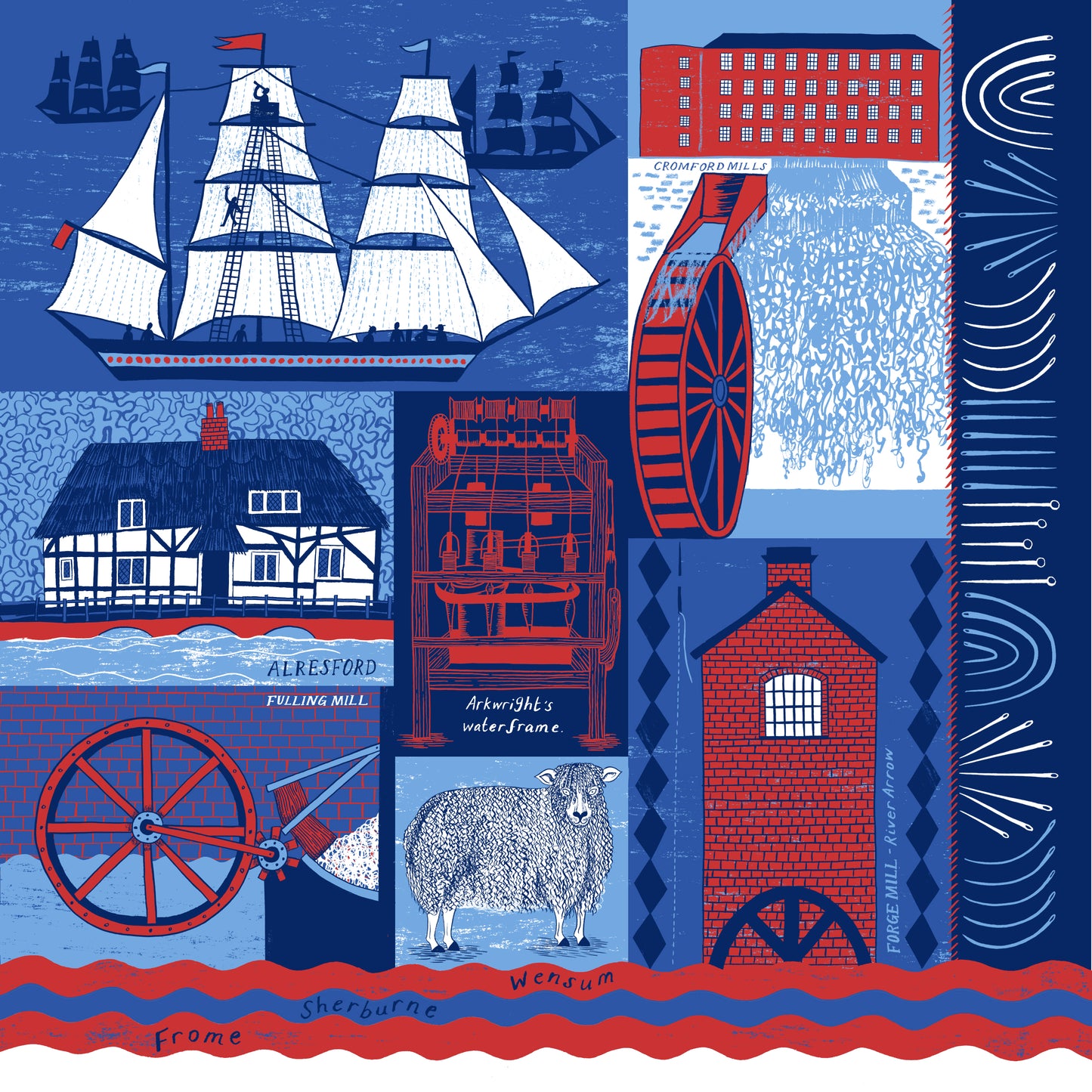
Water is not only a medium of making but also a site of contestation. As Robert Macfarlane argues in Is a River Alive?, rivers are not passive resources but living systems deserving of legal and cultural recognition. Freshwater – so scarce in global terms – has historically sustained centres of textile production from Belgium’s linen industry and England’s woollen mills to India’s celebrated cotton-dyeing traditions. Yet these same waterways have borne the burden of industrial waste and ecological neglect. Encouragingly, a new generation of designers and makers is rethinking these relationships. In places such as Baroda and Jaipur, textile printers are implementing rainwater harvesting and greywater filtration systems, demonstrating that sustainable practice can be embedded within tradition.
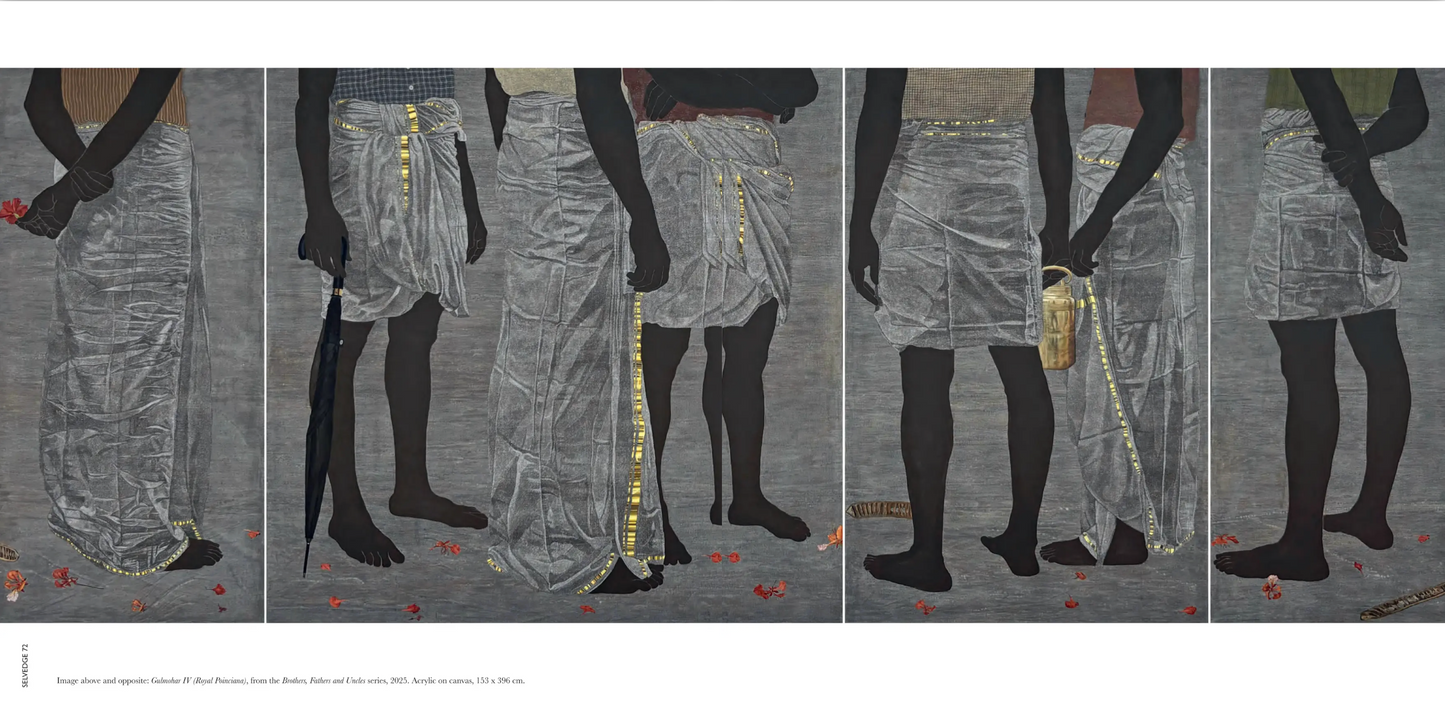
In the brackish backwaters of Kerala, where lagoons and canals run parallel to the Arabian Sea, water sustains both ecology and craft. Here, the lotus – sacred to Hindu and Buddhist traditions – carries symbolic meaning while also serving as a literal source of fibre. Among these waterways, men loiter, dressed in fluid, undyed cotton lungis, their movements echoing the rhythms of the water itself.
Fluidity in textiles extends beyond material process into the realm of expression. Fabrics cut on the bias move with the body, resisting rigidity and binary definition. They suggest a way of being that is adaptive, responsive, and open. In this convergence of self-care, health, and well-being, hand-dyed cloth becomes both medium and metaphor: a tactile articulation of identity, transition, and continuity.
And so, as the heat of summer rises and you reach instinctively for a cloth to cool your skin, spare a thought for the water it holds within its fibres – the unseen resource that has shaped its journey, and continues to shape our world.
Polly Leonard, Founder
Share




It has been a pleasure reading the new issue of Selvedge Magazine. It covers such varied topics. Particularly loved the feature of Kashmir Loom in the magazine.
Thanks!
I only found out about this beautiful treasure of a magazine recently. Inspiration on every page - one to collect and mull over - thank you ❤️
I love the magazine and the information in the articles. However, there were 2 articles in this issue that I could not read because of black type on dark blue and dark blueish/purple page colors ("Blue Murder" and "Catch of the Day"). I have sent letters to the editors complaining about the need to take into account older eyes that need more definition than provided with the very dark colored page backgrounds. If it weren't for that, I would have rated the issue 5 stars.
Love the content as always. I always enjoy the depth and quality of the information. A beloved family member has been a rower for many years, and I could not resist buying this edition outright. The only problem was the condition of my copy, which got a bit warped during shipping. Seems about right, perhaps, for an issue that deals with water. I see the humor.